
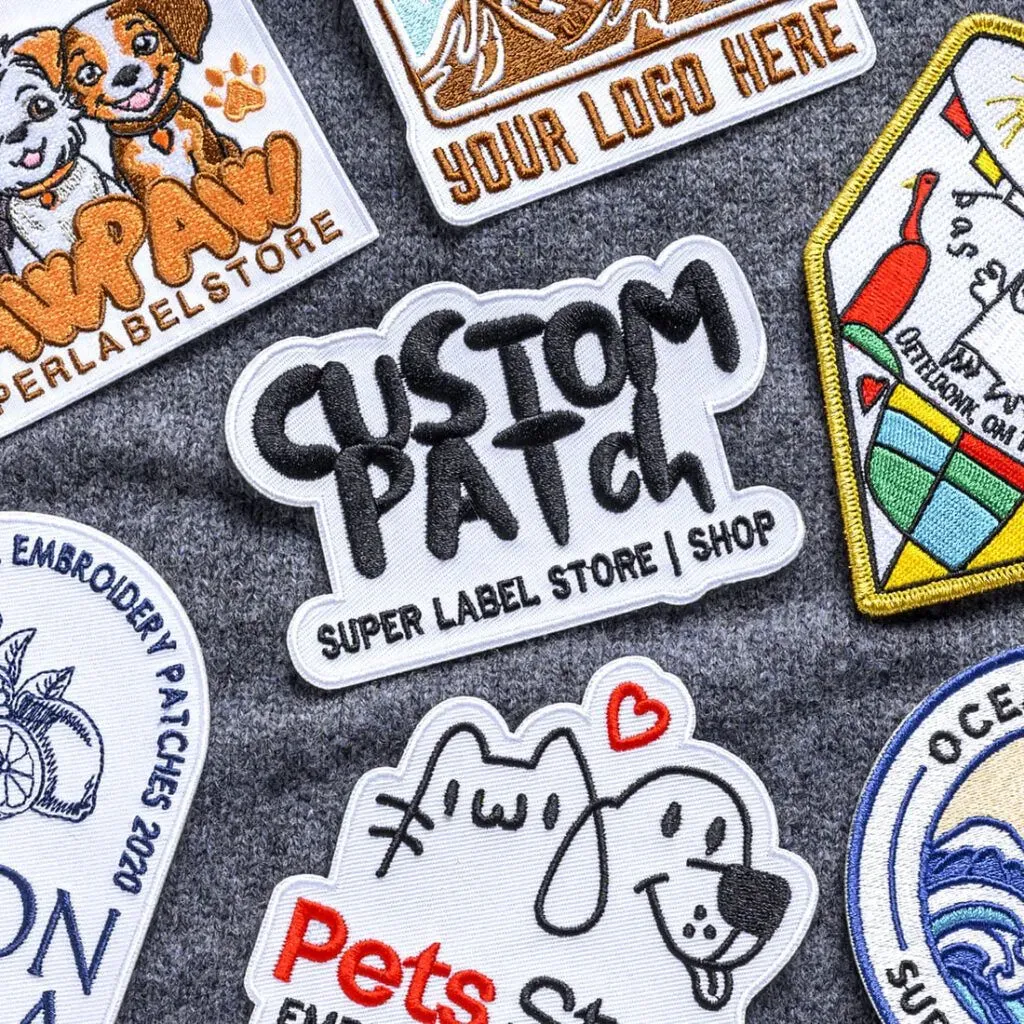
Buying custom patches is a practical way to brand apparel, uniforms, bags, and merchandise, turning everyday items into recognizable symbols of your team or brand that customers and fans can spot from across the room. A smart shopper considers not just appearance, but durability, colorfastness, and custom patches quality, because high-quality patches stay vibrant and secure through wash cycles and heavy wear. From patch type, patch backing options, sizing, bulk custom patches pricing, and supplier reliability, the buying journey benefits from clear criteria, practical samples, and honest cost breakdowns that help you compare options confidently. Whether outfitting a sports team, a club, or a fashion line, the right patches resist fading, resist peeling, and reinforce your branding story with every visible stitch. This guide highlights how to evaluate patch quality, trustworthy suppliers, and total value, so you can choose embroidered patches, woven variants, or printed styles that align with your brand and budget.
In practical terms, this means selecting badge embellishments for garments that communicate your identity through durable stitching, refined borders, and secure attachment. Think of these fabric emblems as logo patches you can sew, iron-on, or fasten with hook-and-loop systems, enabling easy rotation while preserving a cohesive presence across collections. By exploring materials, finishes, and production options, you gain the flexibility to balance style with longevity, so your branding accents withstand daily wear and repeated laundering.
Buying custom patches: Aligning end use with patch backing options
Before you purchase patches, define how they will be used—workwear, uniforms, bags, or promotional merchandise. That decision directly influences backing options and durability expectations. In the context of buying custom patches, identifying the end use helps you pick a backing that stays secure through washing, wear, and branding visibility.
For heavy fabrics or frequent washing, sew-on or merrowed borders paired with a sturdy backing tend to outperform iron-on options, while Velcro backings offer easy interchangeability for items that are updated or exchanged. Evaluating patch backing options early prevents peeling, misalignment, or fraying and saves time and cost later in production.
Embroidered patches vs woven and printed: choosing for custom patches quality
Embroidered patches deliver bold color, high contrast, and long-lasting wear, making them a classic choice for brand visibility. Woven patches, by contrast, offer finer detail and a softer hand, which suits logos with delicate lines; printed patches can reproduce photography or gradients but may wear differently over time. When evaluating, consider your design complexity and how each patch type matches your logo while keeping the notion of custom patches quality in mind, and request samples to compare results.
A good test is to request samples of embroidered patches, woven patches, and printed options to compare edge finishing, color fidelity, and stitch density. For small text or intricate logos, check legibility at intended sizes and verify that the production process preserves your brand’s look after multiple washes.
Sizing, shapes, and design for maximum impact
Patch size and shape should align with garment style and placement. Common sizes range from 1 to 3 inches for cuffs and collars to 3 to 4 inches for jackets and bags. Shapes can be round, square, shield, or custom die-cut to match your logo, each influencing production cost and visual impact. When you share artwork, ensure scalable vector files or high-resolution images are provided to preserve color accuracy during embroidery.
Design testing helps balance visibility with cost. Designers often test a few size options to see which delivers the clearest logo at a distance, and you should confirm color separation for accurate embroidery. Clear separation of colors helps reduce misregistration and ensures the final patch matches your brand as intended.
Materials, durability, and finishing touches
Materials influence both look and life span. High-quality patches use durable threads, water-resistant backing, and sturdy borders, such as merrowed edges or satin stitch borders that enhance durability and a professional finish.
If patches will see active use, anti-fray stitching around edges and fade-resistant dyes can extend life; for fashion lines, woven patches with knife-edge finishing offer a refined appearance. Always request a finished sample to inspect border tightness and craftsmanship before committing to a large run.
Pricing, MOQs, and bulk custom patches pricing strategies
Pricing for custom patches depends on size, type, thread count, color complexity, backing method, and quantity. In general, larger patches and those with multiple colors carry higher costs, while bulk custom patches pricing typically includes volume discounts and lower per-piece rates.
When comparing quotes, ask for per-piece pricing at your target quantity, the cost of proofs or samples, shipping, and any setup or art fees. Also consider long-term value: patches that resist wear and require fewer replacements can save money and protect your brand over time.
Evaluating suppliers, proofs, and sample testing for reliable results
Evaluating suppliers is as important as the design. Look for manufacturers with clear artwork guidelines, responsive communication, and a track record of on-time delivery; request a sample pack to test embroidery or weaving and to review patch backing options.
Ask for a formal art-to-patch process, including proofs, color-matching sheets, and a confirmed lead time. Ensure the supplier provides after-sales support for misprints or shipping damage, and verify their ability to handle your target quantity and rush orders.
Frequently Asked Questions
When buying custom patches, what should I look for to ensure good custom patches quality and value?
Key factors include patch type (embroidered patches vs woven patches), patch quality (stitch density, colorfast threads, edge finishing), backing options, size, and MOQs. Always request samples to test color matching and wash durability. When comparing quotes, consider bulk custom patches pricing and total value, including setup fees, proofs, and shipping.
How do patch backing options affect durability and application when buying custom patches?
Backing determines how patches are attached and how long they last. Iron-on backing is convenient but may lift on heavy fabrics or after washing. Sew-on backing offers the strongest hold, ideal for uniforms and frequent washing. Velcro or magnetic backings provide removability for certain applications. Always test backing on representative fabrics and wash cycles.
What are the main differences between embroidered patches and woven patches when buying custom patches?
Embroidered patches are dense, colorfast, and highly visible; they work well for bold logos and stronger edge definition. Woven patches offer finer detail and a flatter, softer finish but may not achieve the same punch in color or edge sharpness as embroidery. Consider design complexity, legibility of small text, and edge finishing (merrow or laser-cut). Request samples to compare how each patch type preserves your logo in wear and washing.
What should I know about bulk custom patches pricing when buying custom patches for a large order?
Pricing is driven by patch size, type, thread count, color complexity, backing, and quantity. Bulk discounts often reduce per-piece costs and may lower setup fees, but MOQs can apply. When comparing quotes, ask for the per-piece price at your target quantity, the cost of proofs or samples, shipping, and any art or setup fees. Also weigh long-term value: more durable patches save replacements over time.
What design and sizing considerations should guide me when buying custom patches to ensure embroidered patches look correct?
Choose patch size to fit garment style and placement, and select a shape that complements your logo. Ensure artwork is scalable vector-based to preserve details; specify color codes and thread colors for color accuracy. Confirm edge finishing (merrow, satin, or laser-cut) and request proofs to verify legibility and color before production.
How can I evaluate suppliers for buying custom patches to ensure quality and reliability?
Look for suppliers with clear artwork guidelines, responsive communication, and a track record of on-time delivery. Request a sample pack with embroidery or weaving tests, color match sheets, and a finished patch proof. Check customer reviews, ask for references, and confirm production capabilities for your quantity and rush orders. Ensure transparent quotes, lead times, and after-sales support for issues like misprints or shipping damage.
| Aspect | What to Look For | Why It Matters / Tips |
|---|---|---|
| End use and backing | Define application (sew-on, iron-on, Velcro); choose backing accordingly | Determines durability, attachment method, and care requirements. |
| Patch types | Embroidery vs woven vs printed; consider logo complexity and legibility | Affects color depth, edge finish, and wear characteristics over time. |
| Sizing and shape | Size and logo shape align with garment style and placement | Influences visibility, fabric real estate, and production cost. |
| Color and thread | Request color specs, high thread count, and color-matching standards | Ensures color accuracy and longevity; ask for proofs on size variants. |
| Backing options and attachment | Iron-on, sew-on, Velcro, or adhesive; test wash and fabric compatibility | Directly affects durability, wash resistance, and ease of use. |
| Materials, durability, finishing | Durable threads, water-resistant backing, merrowed or satin borders | Contributes to professional look and long life; consider anti-fray stitching for active wear. |
| Turnaround and MOQs | Lead times, minimums, and availability of samples | Helps manage timelines and costs; request a sample and a clear cost breakdown. |
| Pricing and bulk | Patch size, type, color complexity, backing, quantity; request per-piece price and proofs | Longer runs lower per-piece costs; assess total value including setup, proofs, and shipping. |
| Supplier evaluation | Artwork guidelines, communication, delivery track record; request samples | Reliability and support affect consistency and post-sale service. |
| Artwork and proofs | Provide vector artwork, color codes, and proofs before production | Prevents costly reworks and ensures color accuracy. |
| Order placement and communications | Complete spec sheet, shipping address, deadlines; request tracking | Facilitates smooth production and on-time delivery. |
| Care and maintenance | Follow washing guidelines; avoid high heat and inspect patches after washing | Extends life, preserves color and attachment performance. |
| Common mistakes to avoid | Backings wrong for garment, too few stitches, skipping proofs, poor color matching, ignoring care | Learning these helps prevent issues and saves time and money. |
| Real-world use cases and inspiration | Schools, brands, events; ensure patches align with brand style and audience | Demonstrates practical applications and potential ROI for different applications. |
| Order-ready examples (implied) | — | — |
Summary
buying custom patches is a balance between design, quality, and value. By focusing on patch type and quality, backing options, sizing and color accuracy, and a trusted supplier, you can secure patches that elevate your brand and stand up to wear and care. Start by gathering artwork, defining your backing preference, specifying the patch size, and reaching out to reputable suppliers to request samples and quotes. A thoughtful approach now pays off with patches that perform beautifully for years to come.